What $6 Diesel Really Costs a Box Truck (And What You Can Do About It)
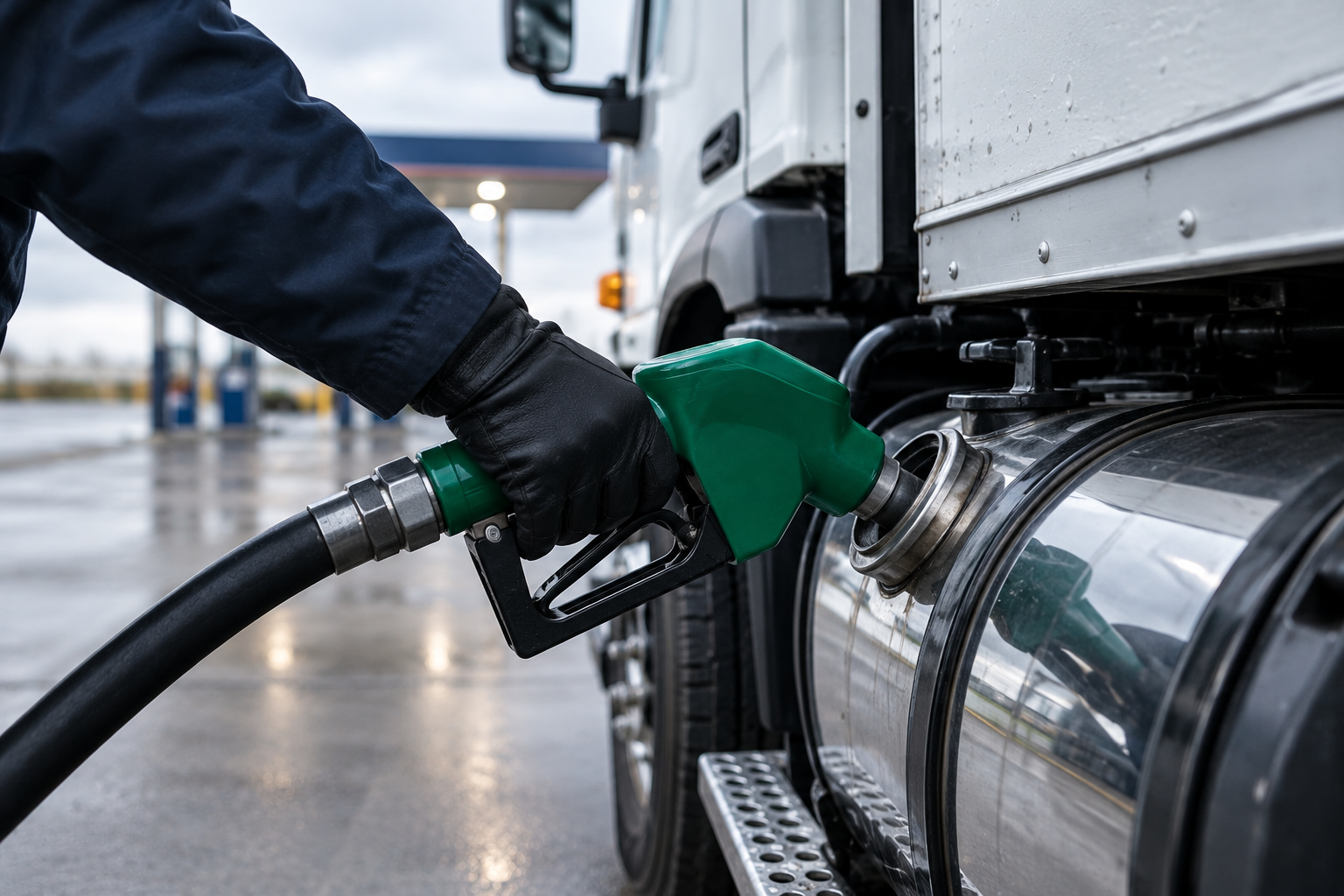
You can’t control what diesel costs at the pump. You can control how many gallons your trucks burn, and right now every gallon you save is worth almost twice what it was a year ago.
The national average for on-highway diesel hit a record $6.53 a gallon the week of September 21, 2026, according to the U.S. Energy Information Administration. It was still $6.28 the week of October 19, about 73% higher than the same week last year.
If you run box trucks, stake bodies or dump trucks for a living, you’re already seeing it on every fuel card statement. Here’s what it adds up to for a typical medium-duty truck, and what our service team at H.K. Truck Center sees make the biggest difference.
What $6 diesel costs one truck
A Class 6 box truck running 25,000 miles a year now burns about $19,600 in fuel, roughly $8,300 more than it did a year ago.
The math below assumes 8 miles per gallon, a fair real-world number for a loaded medium-duty truck in stop-and-go Jersey traffic. Your trucks may do better or worse, so plug in your own numbers.
| Annual miles | Gallons used | Cost at $3.62/gal (Oct 2025) | Cost at $6.28/gal (Oct 2026) | Extra cost per truck |
|---|---|---|---|---|
| 15,000 | 1,875 | $6,788 | $11,775 | $4,988 |
| 25,000 | 3,125 | $11,313 | $19,625 | $8,313 |
| 40,000 | 5,000 | $18,100 | $31,400 | $13,300 |
Run five trucks at 25,000 miles each and you’re looking at more than $41,000 a year in added fuel cost.
Now flip it around. Gain just one mile per gallon on that 25,000-mile truck (8 mpg to 9 mpg) and you burn about 347 fewer gallons a year. At today’s price, that’s roughly $2,180 back per truck.
Don’t budget for relief anytime soon
The EIA expects diesel to average about $4.50 a gallon in 2027 and to stay above $4 through the end of that year. That’s better than $6, but it’s still well above what most operators priced into contracts a year ago.
Three things are keeping prices up. Shipping through the Strait of Hormuz has been disrupted by the conflict with Iran. Refinery outages and supply disruptions overseas have tightened the global diesel market. And U.S. distillate inventories are running below their five-year average heading into winter.
The takeaway for a small fleet: treat high fuel costs as the plan for 2027, not a blip to wait out.
Seven ways to burn less fuel in a medium-duty truck
None of these require a new truck. Most of them cost less than one tank of fuel.
1. Cut idle time
Argonne National Laboratory data puts a Class 6 or 7 diesel at about 0.44 gallons an hour at idle, and more with accessories running. One hour of idling a day over 250 workdays adds up to about 110 gallons a year. That’s roughly $700 per truck at current prices, spent going nowhere. Set an idle shutdown timer in the engine programming and make “engine off at the stop” a house rule.
2. Check tire pressure weekly
Underinflated tires add rolling resistance, and rolling resistance is paid for in diesel. Low tires also wear out faster. A gauge and five minutes on Monday morning pays for itself.
3. Keep filters and injectors on schedule
A clogged air filter makes the engine work harder for the same power. Dirty fuel filters and worn injectors hurt combustion, which shows up as lost mileage and more soot. These are cheap parts. Skipping them is expensive.
4. Watch your aftertreatment
A healthy diesel particulate filter regenerates on its own. One that’s struggling forces extra regen cycles, and every regen burns fuel to clean the filter. If your dash is lighting up for regens more often than it used to, get it looked at before it turns into a derate. (More on DEF and derates in our companion post.)
5. Slow down on the highway
Fuel use climbs fast above 60 mph because wind resistance grows with speed. Most modern diesel engines let a dealer set a road speed limit in the engine’s programming. It’s a one-time change that works on every driver, every day.
6. Plan routes and loads
The cheapest mile is the one you don’t drive. Consolidate stops, cut empty backhauls where you can, and don’t send a 26-footer to do a job a 16-footer could handle.
7. Track fuel by truck, not by fleet
A fleet-wide fuel number hides the one truck that’s pulling 6.5 mpg while the rest pull 8.5. Track gallons and miles per unit every month. The outlier is usually telling you about a mechanical problem.
When it’s time to rethink the truck itself
Sometimes the fuel problem is the truck. If you’re running a Class 7 to haul Class 5 loads, you’re paying for weight and horsepower you don’t use on every mile. If an older unit needs constant aftertreatment work, the repair bills and the lost mileage stack up together.
Two options are worth pricing out. A right-sized new truck can cut both fuel and maintenance, and with new EPA emissions rules taking effect for 2027 model-year engines, this is a window to compare 2026 pricing against what’s coming. For seasonal peaks, renting a truck for the busy months can beat owning one that sits half the year.
Common questions
How much does it cost to fuel a box truck?
At $6.28 a gallon, a box truck that gets 8 mpg and runs 25,000 miles a year burns about $19,600 in diesel. The same truck cost about $11,300 to fuel a year earlier.
Will diesel prices go down in 2027?
The EIA expects some relief, with diesel averaging about $4.50 a gallon in 2027. It still forecasts prices above $4 through the end of that year.
How much fuel does a truck burn idling?
Argonne National Laboratory data puts a Class 6 or 7 diesel at about 0.44 gallons an hour at idle with no load. Running accessories or a PTO raises that.
Book a service visit before winter
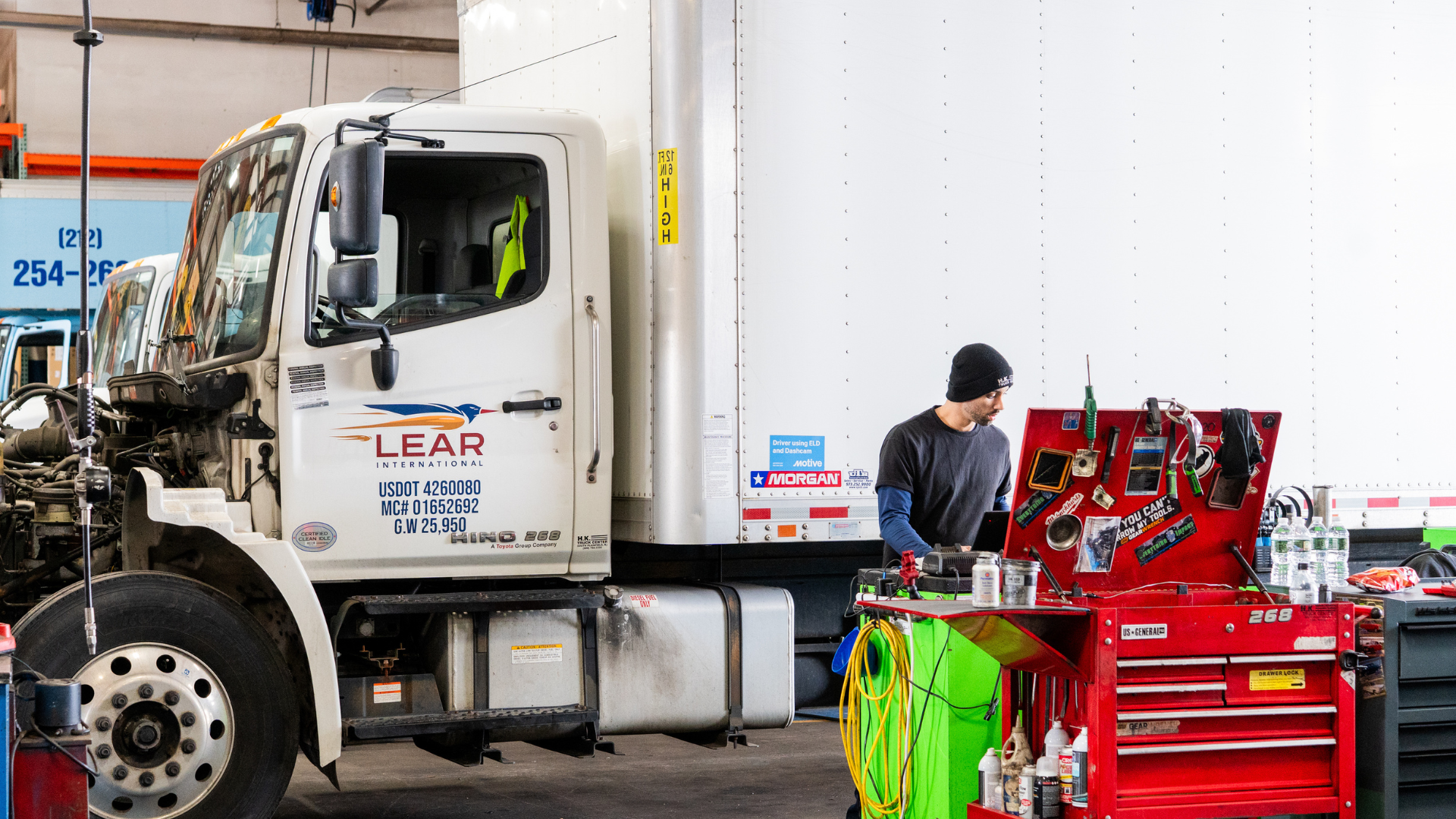
Our factory-trained technicians in South Plainfield can check the things that quietly cost you mileage: filters, injectors, tires, aftertreatment health and engine programming like idle shutdown and road speed limits. As a Certified Ultimate Hino dealer and Cummins Authorized Service Center, we know these engines inside and out.
Call (908) 754-3330 or contact our service team. If your truck is down for a while, ask about a rental so the work keeps moving.